Link Building Strategies in 2026: What Works by Budget, Effort and Risk
Link building strategies sorted by cash cost, effort and risk: which tactics fit a DR 20-40 site, which need an established brand, and what paid placements cost in 2026.
· · 10 min read
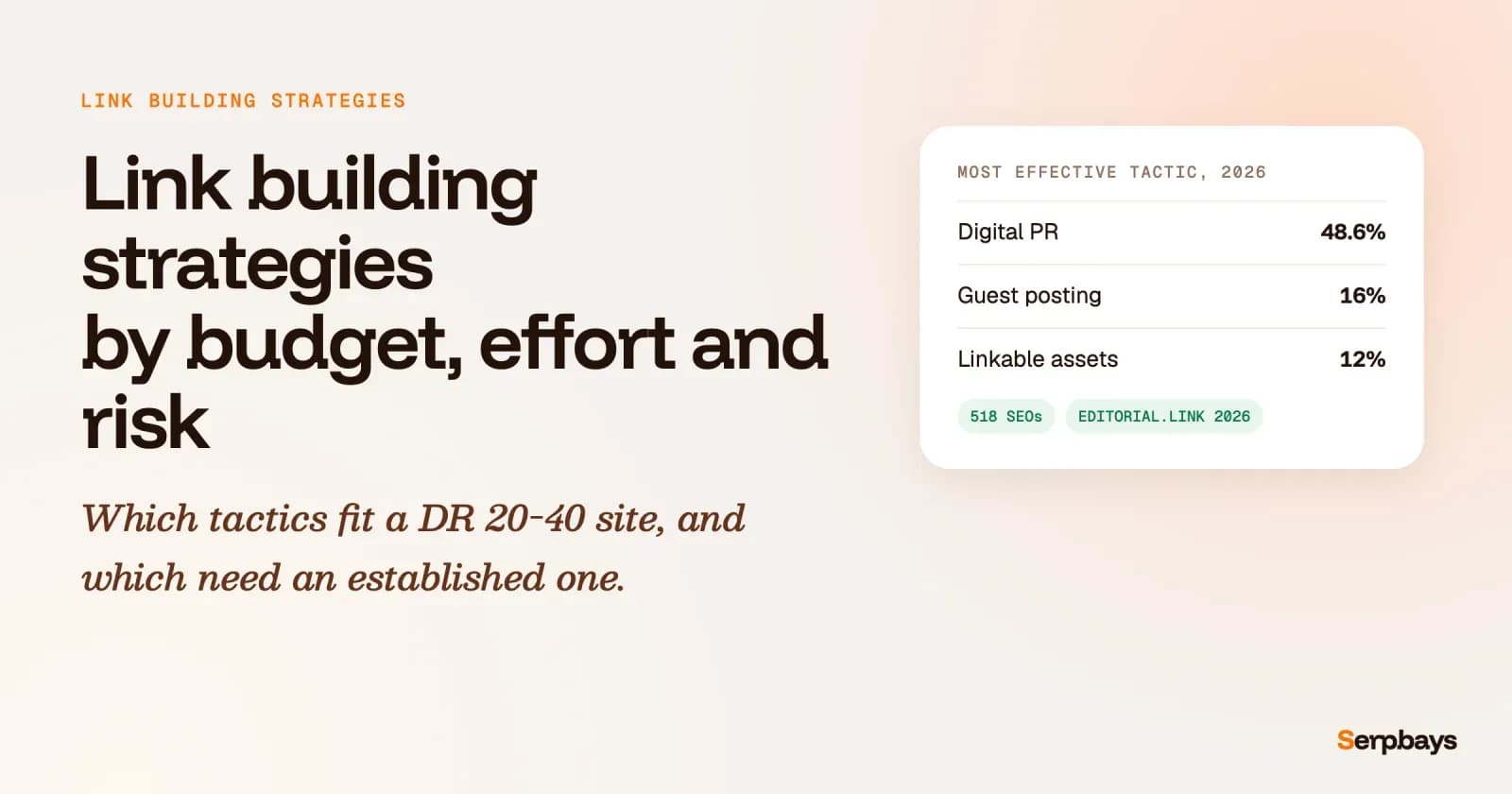
Ask 518 SEOs which tactic works best and almost half say digital PR. That's the headline from a 2026 survey, and it's the wrong place to start if your site is DR 25 with no press list and no data anyone has asked for.
Most lists of link building strategies give you 15 or 30 tactics in a flat row, as if a new SaaS blog and a household brand should run the same playbook. They shouldn't. This guide sorts the tactics by what they cost in cash, what they cost in hours, and how much risk they carry, then says which ones fit a DR 20-40 site and which only pay off once you're established.
Short answer: the best link building strategies for a small site are cheap in cash and heavy in effort: reclaim brand mentions, get partner links, pitch resource pages, and publish one asset worth citing. Add a few vetted guest posts or link insertions on relevant sites with real traffic to move key pages. Save digital PR campaigns for when you have data or news worth covering.
What makes link building strategies for SEO work in 2026?
Links still matter because Google says so in plain words. Its link best practices page states that "Google uses links as a signal when determining the relevancy of pages and to find new pages to crawl." The same page asks for anchor text that is "descriptive, reasonably concise, and relevant" to both pages.
So a link does two jobs: it helps Google find you and it tells Google what you're about. Every strategy below is judged on whether it earns links that do both from sites your buyers actually read.
The other half of the rulebook is what Google won't reward. Its spam policies on link spam list buying or selling links for ranking purposes, excessive link exchanges, automated programs that create links, low-quality directory or bookmark links, and keyword-rich links in widgets. The same page says paid links are not a violation when they carry rel="nofollow" or rel="sponsored".
That's the frame. Relevance and real readers on one side, scale and manipulation on the other. Most link building techniques sit somewhere in between, and where they sit depends on how you run them.
How should you group link building techniques?
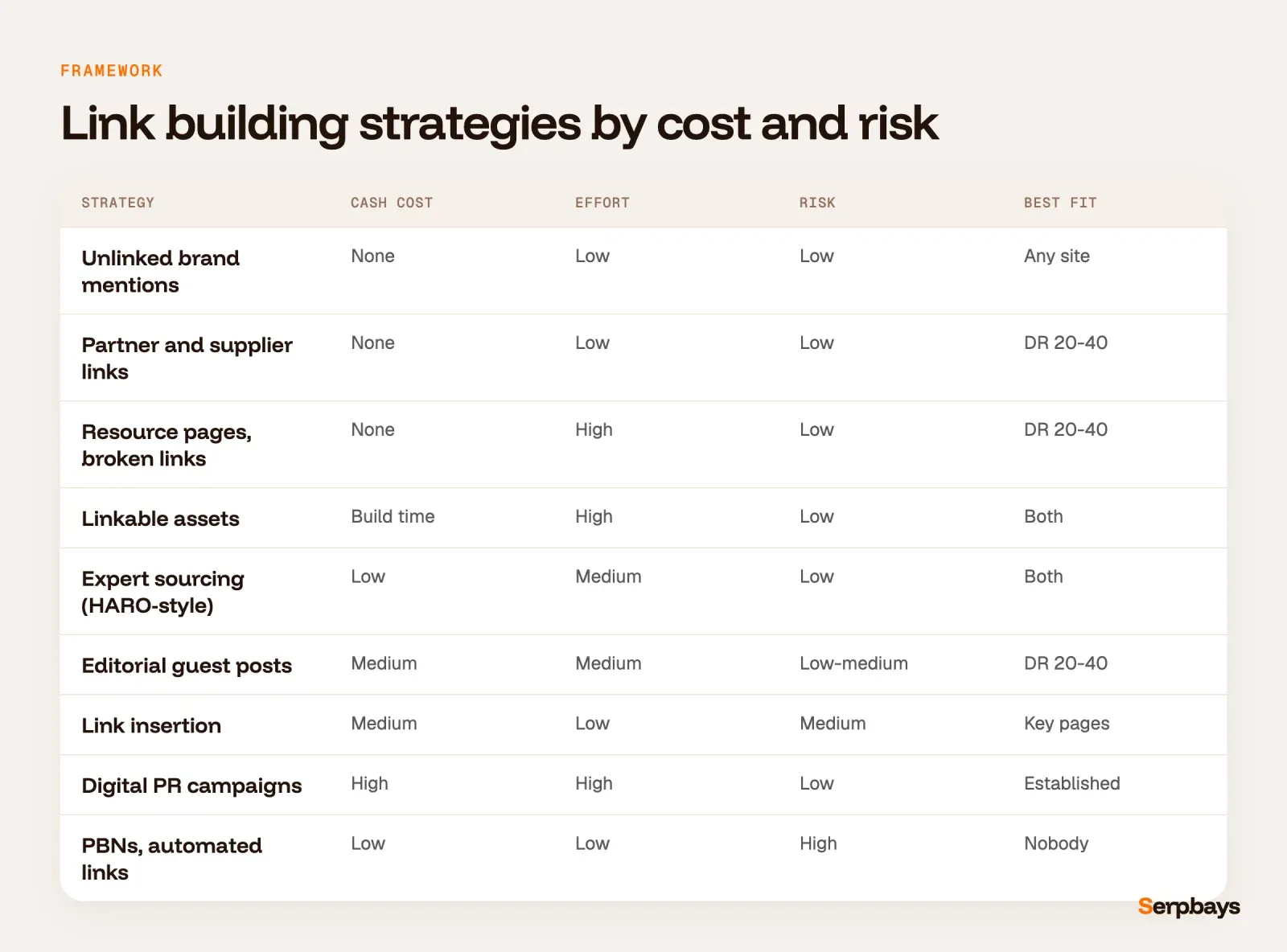
I sort every tactic on three axes: cash cost, effort in hours, and risk if Google or the publisher decides the link isn't editorial. Then I ask one question: does it work at DR 20-40, or does it need an audience you don't have yet?
| Strategy | Cash cost | Effort | Risk | Best fit |
|---|---|---|---|---|
| Unlinked brand mentions | None | Low | Low | Any site with mentions |
| Partner, supplier and customer links | None | Low | Low | DR 20-40 |
| Resource pages and broken links | None | High | Low | DR 20-40 |
| Linkable assets (tools, data) | Build time | High | Low | Both, compounds over time |
| Expert sourcing (HARO-style) | Low | Medium | Low | Both |
| Editorial guest posts | Medium | Medium | Low to medium | DR 20-40 |
| Link insertion (niche edits) | Medium | Low | Medium | Key pages at any DR |
| Digital PR campaigns | High | High | Low | Established sites |
| PBNs, automated links, mass syndication | Low | Low | High | Nobody |
The ratings are my judgment from running campaigns, not a measured score. The pattern is the useful part: the safest backlink building strategies cost time, and the fastest ones cost money and carry more risk.
Which free backlink building techniques work for a DR 20-40 site?
When you're small, your cheapest links come from people who already know you. Start there before you spend anything.
Unlinked mentions. Search for your brand, product and founder names, find pages that mention you without a link, and ask for one. The writer already chose to talk about you, so the ask is small.
Our guide to tracking brand mentions and turning unlinked ones into links covers the tools and the email.
Partner and supplier links. Integrations pages, "where to buy" pages, customer case studies, agency partner directories. These are relevant by definition.
Keep them editorial though: Google lists partner pages made "exclusively for the sake of cross-linking" as link spam.
Resource pages and broken links. Find pages that list tools or guides in your niche, check them for dead links, and offer your page as the replacement. It's slow.
Expect a low reply rate and plan for volume of pitches, not volume of links.
One linkable asset. A free tool, a calculator, or a page of original numbers gives writers a reason to cite you without being asked.
We wrote up how we built 40+ free tools in content marketing for link building. One good asset beats ten average blog posts for links.
My honest link building advice for this stage: don't skip these because they feel slow. They are the links nobody can buy, and competitors can't copy them.
What do paid link building methods actually cost?
Free tactics rarely move a money page fast enough on their own. That's where paid link building methods come in: guest posts on relevant sites, and link insertions into existing articles.
Here's what the market charges. We pulled every live listing on the Serpbays marketplace on 16 Nov 2026 that offers a guest post, excluding DR 80+ (331 of those are subdomains of one Polish news portal, naszemiasto.pl, which skews the band).
- Median listed guest post price at DR 0-19: $81 (5,559 listings).
- DR 20-39: $170 (9,832 listings).
- DR 40-59: $215 (6,312 listings).
- DR 60-79: $294 (2,097 listings).
Of 23,800 guest post listings below DR 80, 21,202 (89%) are listed at $500 or less. That's a useful check against the 2026 Editorial.Link survey, where the average price the 412 people who answered called acceptable for one high-quality backlink was $508.95.
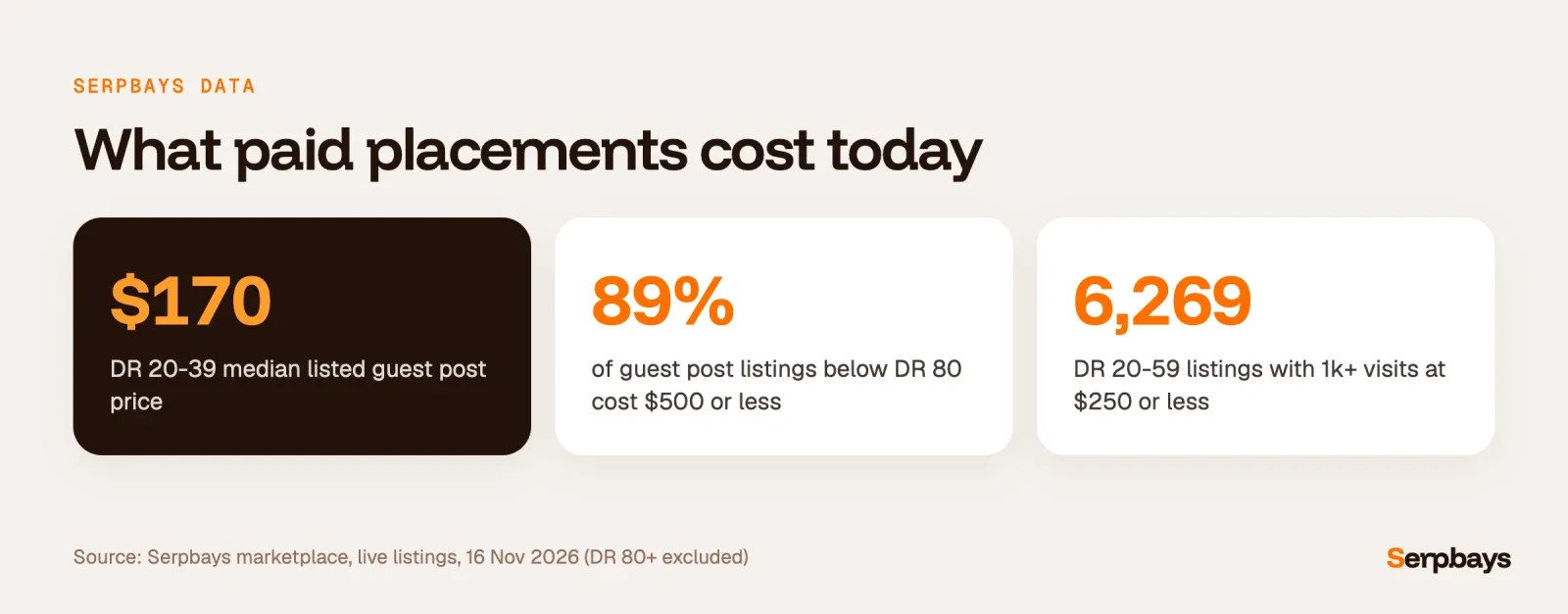
Price alone tells you little. 6,269 listings sit at DR 20-59 with 1,000+ monthly organic visits and a price of $250 or less, so you don't need a big budget to find sites with real readers. You do need to vet them: check the DR yourself with a bulk DR checker rather than trusting the seller, then look at traffic and topic fit.
Which format? Guest posts give you a new article and more control over context.
Our guide to finding and vetting guest posting sites covers the search side. Link insertion puts your link into a page that is already indexed, at a median of $158 across our live listings, close to the guest post median.
If you'd rather hand the outreach to someone, read what blogger outreach services include before signing.
And be honest about disclosure. Google's page on qualifying outbound links asks for paid placements to be marked with the sponsored value. Buy for relevance and readers, not for a DR number.
Which advanced link building strategies need an established site?
Digital PR tops the Editorial.Link list: 48.6% of the 518 respondents picked it as the most effective tactic for 2026, far ahead of guest posting at 16% and linkable assets at 12%. One caveat: Editorial.Link recruited more than half of them through its own LinkedIn outreach, and 44.4% work at agencies.
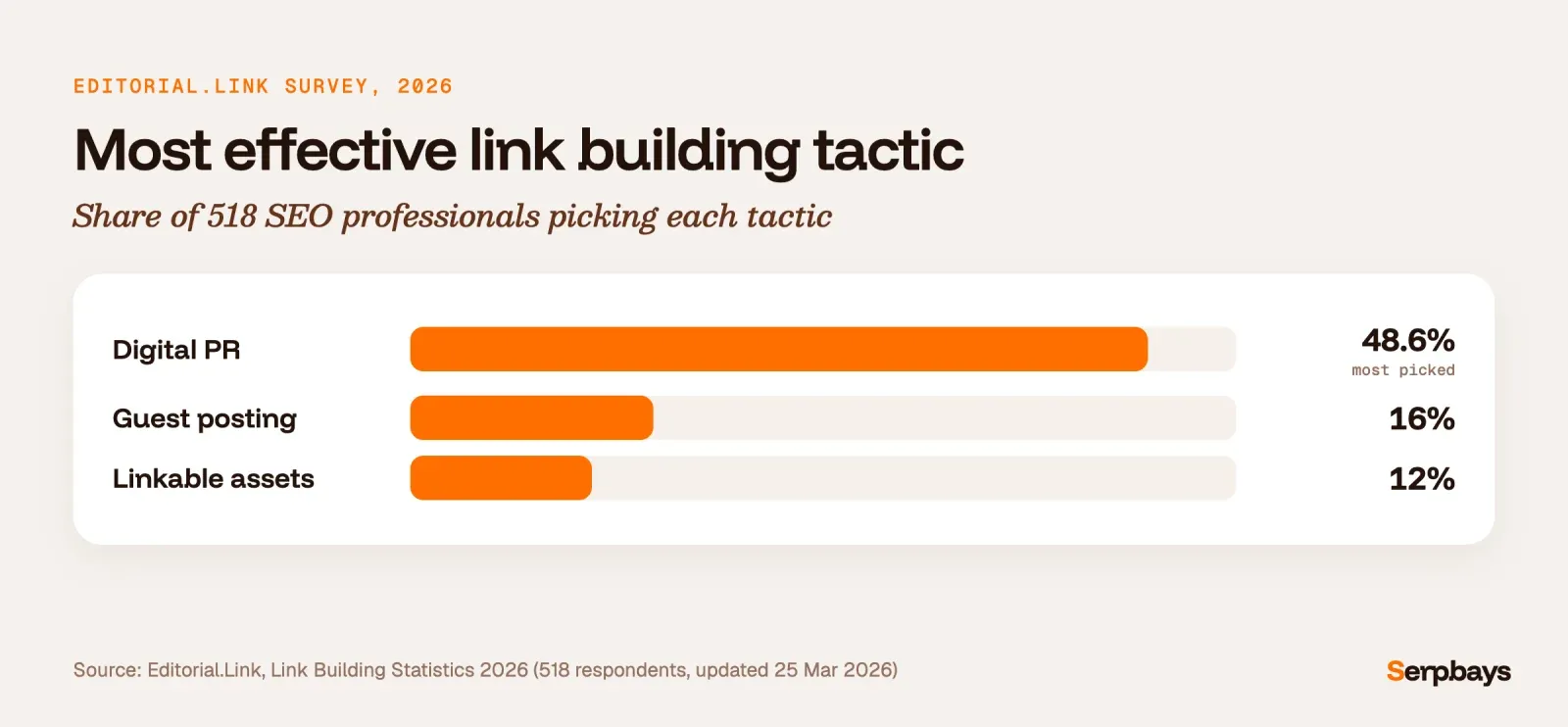
I agree digital PR earns the best links. I disagree that it's where a DR 25 site should start.
A campaign needs a story journalists want: original data, a strong opinion from a known person, or a brand people already recognise. Without that, you pay for a campaign that lands a handful of syndicated links.
If you want to understand the mechanics first, our explainer on what digital PR is walks through it.
The other advanced link building strategies follow the same rule.
Original research works when you have proprietary data. Reactive PR works when a spokesperson can comment fast and credibly. Competitor gap analysis works at any size, but the gaps on an established competitor's profile are often press links you can't win yet.
My take: once you have data no one else has, these become the best link building strategies you can run, because the links keep arriving after the campaign ends.
What are the riskiest link building techniques?
Anything built for scale instead of readers. Google spelled out the guest post version back in May 2017. Its reminder about large-scale article campaigns says Google "does not discourage" guest articles that inform users, then lists the warning signs: keyword-rich links, articles published across many different sites, writers who don't know the topic, and the same or similar content across those articles.
Add Google's current spam policy list and you get the short version of white hat link building techniques: no automated links, no link exchange rings, no cheap directory blasts, no widget or footer links spread across many sites, no keyword-stuffed anchors.
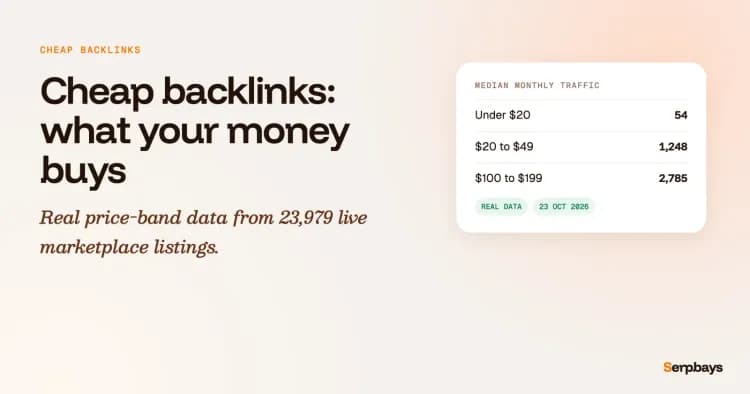
The trap for small sites is volume. A package of hundreds of links for a low price is cheap because nobody vetted the sites. Our post on what cheap backlinks actually buy shows where low price is fine and where it's a warning sign.
How do you build a link building strategy for a DR 20-40 site?
Here's the sequence I'd run for the first 90 days. It mixes free and paid work so key pages move while the slower links build.
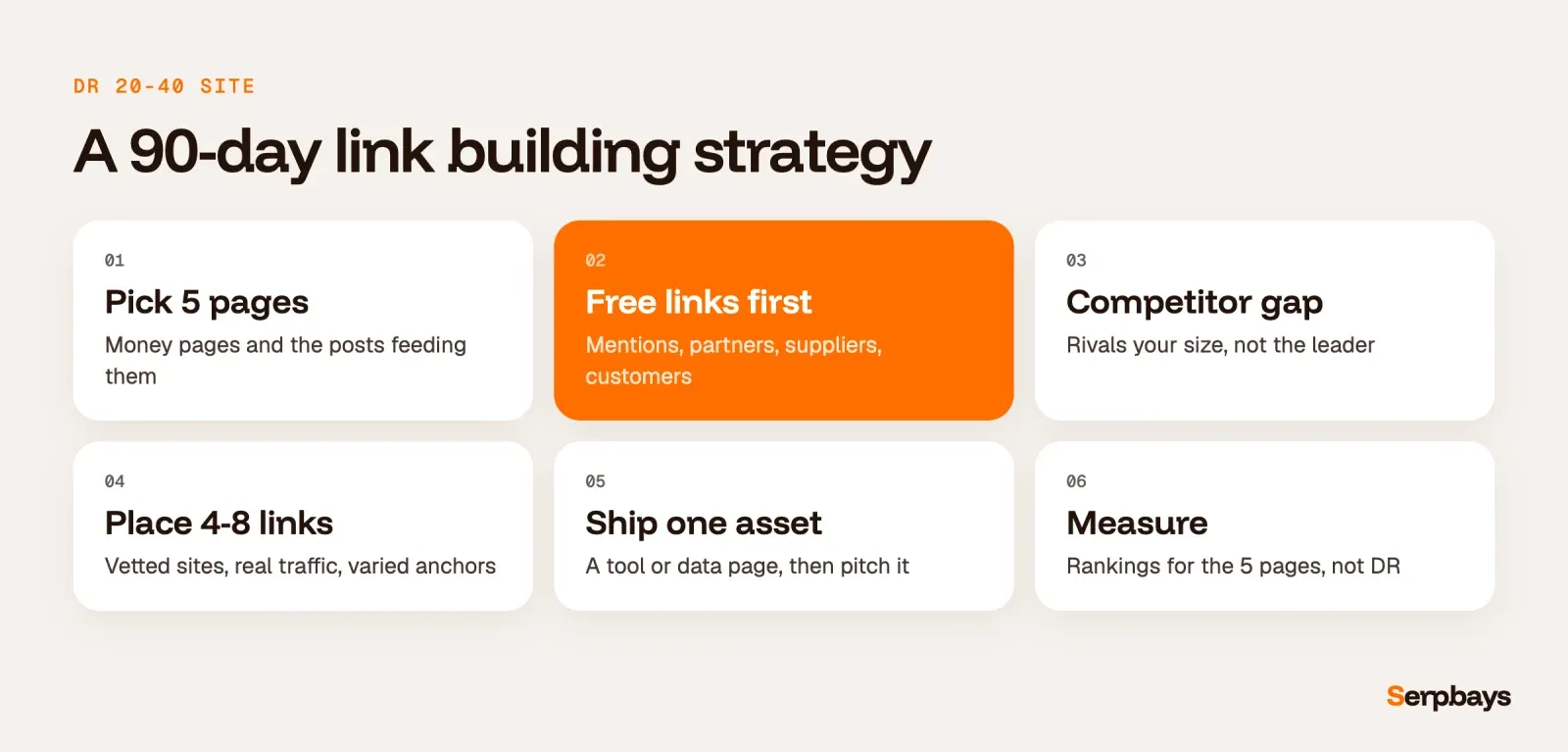
- Pick five target pages. Money pages and the posts that feed them. Links to your homepage alone rarely move rankings for specific queries.
- Clear the free links. Unlinked mentions, partners, suppliers, customers. Usually a week of work.
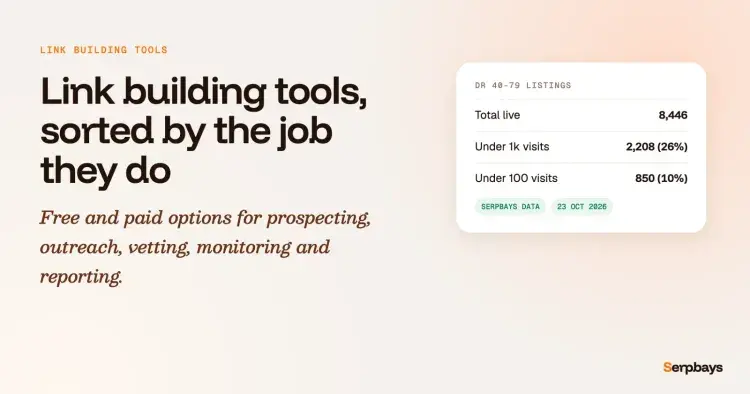
- Run a competitor gap. List the sites linking to two or three competitors at your size, not the market leader. The link building tools guide covers which tools do this, free and paid.
- Place 4-8 vetted links. Guest posts or link insertions on relevant sites with real traffic, varied anchors, pointed at the five pages.
- Ship one linkable asset. A tool or a data page, then pitch it to the resource pages you found in step 3.
- Measure and repeat. Track rankings for the five pages, not DR. Most respondents in the Editorial.Link survey (57.1%) expect results within 1-3 months.
For a store, ecommerce link building strategies follow the same order with different assets: supplier and manufacturer links, buying guides, and gift or comparison pages that bloggers can cite. Product pages rarely earn links on their own, so point placed links at category pages and guides.
A few link building tips that hold at any size: never use the same anchor twice in a row, never buy from a list where you can't see the domain first, and stop reporting on link count alone.
FAQ
Is link building still relevant to SEO?
Yes. Google's link best practices say it uses links to judge relevance and to find new pages. In the 2026 Editorial.Link survey, 73.2% believed backlinks influence the chance of appearing in AI search results, though 64.9% also said a site can rank high without them.
Which backlink is most powerful?
In my experience, an editorial link from a relevant site with real organic traffic, placed in the body of an article that is about your topic. A high DR with no traffic and no topical fit is worth much less than the number suggests.
How long do link building strategies take to work?
In the Editorial.Link 2026 survey, 57.1% of respondents expected results within 1-3 months and 33.0% within 3-6 months. Earned links from assets keep arriving for much longer.
Your next step
Take your five target pages and run the free steps this week. Then decide whether you want to place the paid links yourself or have someone run the whole plan.
If it's the second, look at our managed link building service, which runs hands-off campaigns for you. Whoever does the work, ask to see every site before a link goes live.
Vinayak Gupta is the founder of Serpbays and Wordscloud, with hands-on experience in SEO, content marketing, publisher outreach, and link building. He has worked with SEO agencies, SaaS companies, and digital brands to plan content strategies, evaluate backlink opportunities, and build authority through high-quality placements. At Serpbays, he focuses on making link building more transparent, reliable, and easier for agencies and businesses.
View profile →