White Label Link Building: How It Works, What It Costs and How to Pick a Partner
How white label link building works for agencies, what links cost wholesale on a real marketplace, the risks of putting your name on someone else's links, and 10 questions to ask any partner.
· · 10 min read
A client asks your agency for ten good backlinks a month. You don't have an outreach team, and you don't want to hire one for a single retainer. So you find a partner who builds the links, puts your logo on the report, and never talks to your client.
That's white label link building. It's how a lot of SEO agencies sell link building without running it themselves. It also puts your name on every link someone else builds, which is why picking the partner matters more than the price.
Short answer: White label link building means a third party builds backlinks for your clients while your agency sells and reports the work under its own brand. The partner handles prospecting, outreach, content and placement, and hands you a report with your branding. You set the price your client pays. Your margin is the gap between that price and the partner's wholesale cost, and your reputation depends on the quality of their links.
What is white label link building?
It's outsourced link building that your client never sees as outsourced. The partner works behind your brand, usually under an NDA, and every deliverable goes through you.
You'll see a few related terms, and they're not quite the same:
- White label link building services: only the link building is outsourced. You still own strategy, keyword research and the client relationship.
- White label SEO: the whole SEO service is outsourced, including audits, on-page work and content. Broader, and usually more expensive. Some white label SEO providers include links; many subcontract them.
- SEO reseller programs: you resell a provider's packages, often at fixed prices with a set discount.
- White label backlinks: the individual placements themselves, usually sold per link.
If you already handle strategy in-house and only lack outreach capacity, white label link building is the narrowest and cheapest fit.
How does white label link building work?
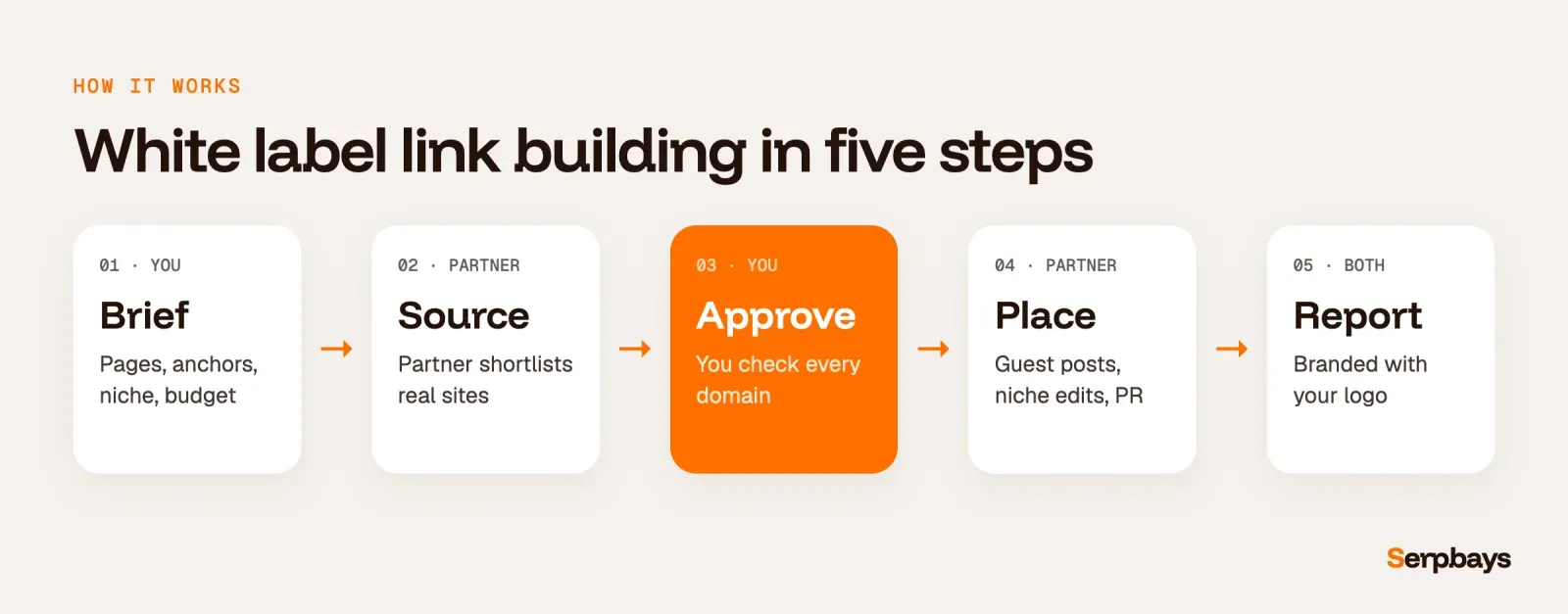
- You send a brief. Target pages, anchor text preferences, niche, budget, and any sites the client already has links from.
- The partner sources sites. A good partner sends you a list of real domains with their metrics before anything is bought.
- You approve the list. This step is where you protect your client. Never skip it.
- The partner places the links. Usually guest posts, link insertions on existing articles, or digital PR placements.
- You get a branded report. Live URLs, anchors, metrics, and ideally ranking movement, with your logo instead of theirs.
The best partners also replace links that disappear within an agreed period, and check placements stay indexed.
What does a white label link building service usually include?
Most packages mix three link types. Guest posts give you a new article with context around the link. Niche edits add your link to an article that already ranks. Digital PR earns mentions on news sites, usually at a higher price. If you're not sure which to use for a client, our comparison of guest posts vs niche edits breaks it down.
Beyond the links themselves, look for: anchor text planning, content writing, a white-label report, link replacement if a placement drops, and someone you can reach when a client asks a hard question.
How much does white label link building cost, and what margin can you make?
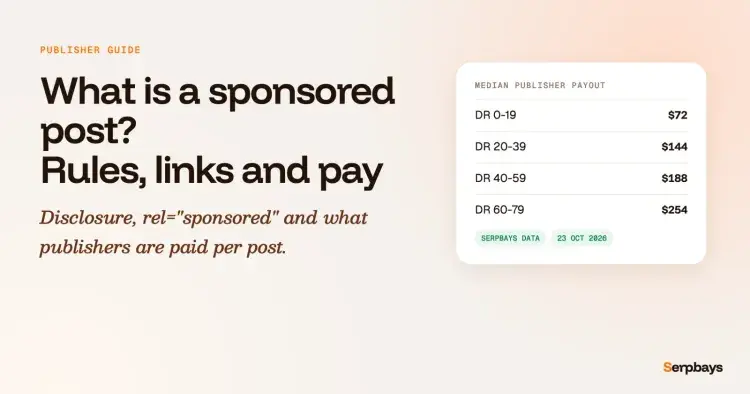
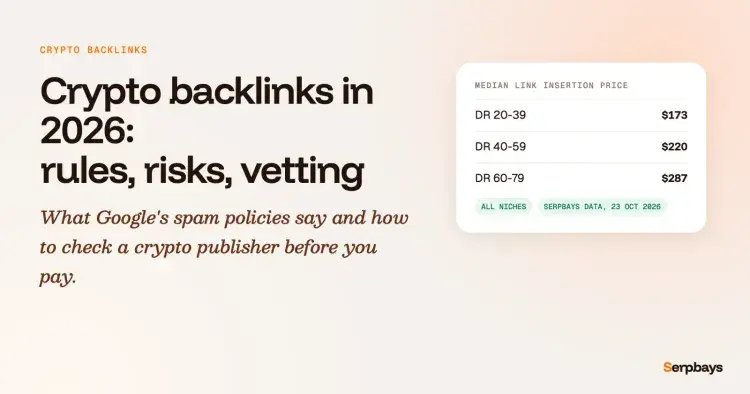
Your cost is whatever the partner pays the publisher plus their fee. Your client's price is up to you. To give you a real baseline, here's the median price publishers charge per placement on the Serpbays marketplace (live listings, 27 October 2026).
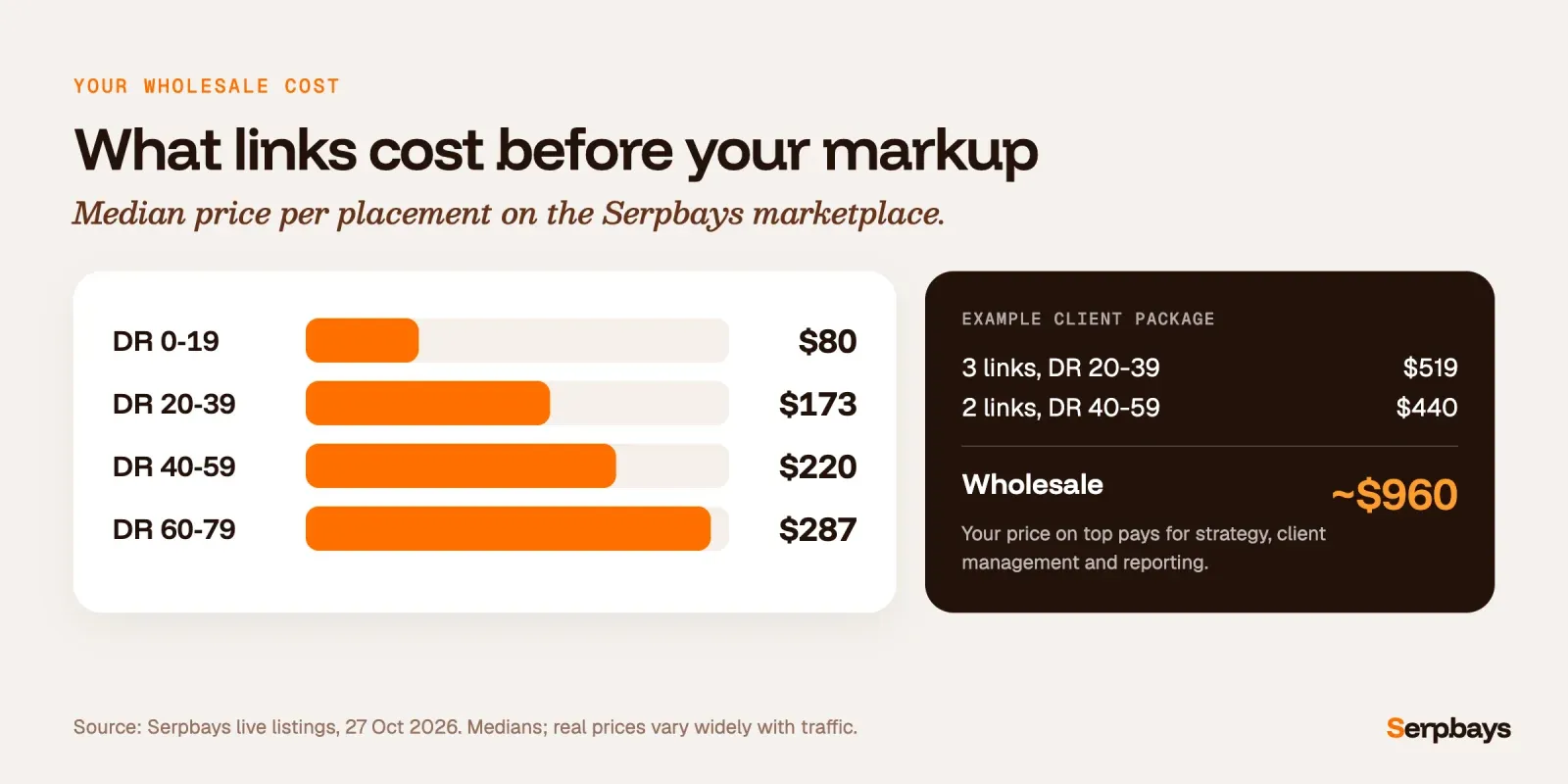
A quick example. A five-link monthly link building package with three DR 20 to 39 sites and two DR 40 to 59 sites costs about $960 at median marketplace prices. Whatever you charge above that pays for your strategy, client management and reporting time.
Two warnings on pricing. First, medians hide a wide spread: two sites with the same Domain Rating can differ by hundreds of dollars, mostly because of real traffic. Second, the cheapest white label offers are cheap for a reason. If a partner sells DR 50 links for $30, the links are probably on networks built to sell links, and your client carries the risk.
Why agencies white label instead of hiring
Outreach is a volume game with a lot of dead ends, which is why so many agencies buy it from blogger outreach services. You need people prospecting, emailing, negotiating, writing and checking placements, and a client roster big enough to keep them busy every month.
White labelling turns that fixed cost into a per-link cost. You can say yes to a link building upsell tomorrow, scale with your client list, and drop back down when a client churns. The trade-off is control: you rely on someone else's sites, someone else's outreach and someone else's standards.
The demand is there. In a 2026 Editorial.Link survey of 518 SEO professionals, 63.1% said they would place links on sites listed on link building marketplaces if the quality was right. Most agencies aren't against buying links. They're against buying bad ones.
The risk: your agency's name is on every link
When a white label partner cuts corners, the client blames you, not them. Google's own advice to businesses hiring an SEO is blunt: you are responsible for the actions of any companies you hire, and you should be careful with anyone who is secretive about what they do.
That applies twice in white label work. Your client is responsible for you, and you're responsible for your partner. Google's spam policies also treat buying links for ranking purposes as link spam unless they're marked sponsored, so be honest with clients about what paid placements are and how you manage the risk.
Red flags in a white label partner:
- They won't show you the domains before you pay.
- Prices are far below the medians above for the same DR.
- Reports show DR and DA but never organic traffic.
- The same handful of sites appear across every client.
- Links sit on pages with dozens of other commercial outbound links. Our guide to toxic backlinks shows what to look for.
- No answer to "what happens if a link is removed?"
How to choose a white label link building partner
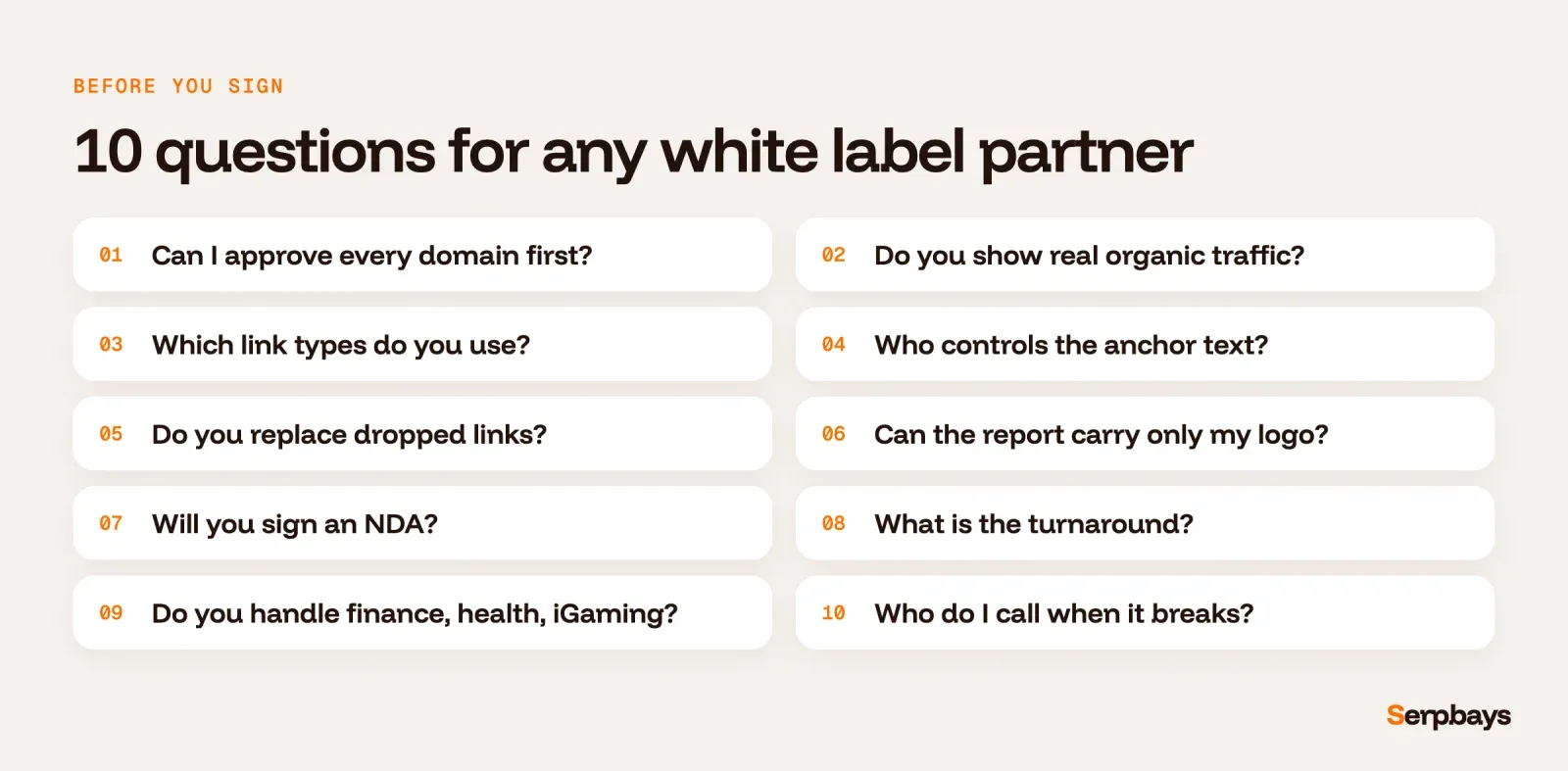
Ask every candidate these ten questions before you sign:
- Can I approve every domain before it's bought?
- Do you show each site's real organic traffic alongside DR and DA?
- Which link types do you use: guest posts, niche edits, PR?
- Who controls the anchor text?
- Do you replace links that drop, and for how long?
- What does your report look like, and can it carry my logo only?
- Will you sign an NDA and never contact my client?
- What's the normal turnaround?
- Do you handle restricted niches like finance, health or iGaming?
- If something goes wrong, who do I talk to?
Then test them with a small order on one client before you move your whole roster. Check every link yourself: is it live, indexed, in the body of a relevant article? Our bulk DR checker and bulk noindex checker make that quick when you're checking a whole batch.
What should a white label link building report include?
The report is the only part of the work your client actually sees, so it carries a lot of weight. A good one answers three questions: what did we get, is it real, and is it working?
- Every live URL, with the date it went live, so the client can click and see the link in context.
- The anchor text and target page for each link, so you can track your anchor mix over time.
- Site metrics that mean something: organic traffic and its trend, next to DR or DA.
- Index status of each linking page, checked after placement.
- Movement on the target pages: rankings for the keywords you're pushing, plus impressions and clicks from Google Search Console.
- A short plain-English summary of what changed and what you'll do next month.
Strip the partner's name and logo out completely, and add yours. If a partner can only send a PDF with their own branding, you'll be rebuilding the report every month, which eats the time you outsourced to save.
One more thing: keep your own copy of every placement in a spreadsheet. If you ever switch partners, or if a client leaves and asks for a full list, you'll want that history in your hands, not someone else's.
Managed white label vs buying links on a marketplace
There are two ways to run white label link building, and many agencies use both.
Fully managed: the partner picks sites, writes content and reports. You approve and forward. It saves the most time and costs the most per link. On Serpbays, managed link building and the monthly plans work this way, with reports that can go to clients under your brand.
Self-serve marketplace: you choose each site yourself from a catalogue with prices and metrics, and the publisher places the link. You do the vetting, so you keep full control and pay closer to wholesale. For larger volumes across several clients, bulk guest post orders add volume pricing and a single point of contact.
My suggestion: start managed for clients where you lack niche knowledge, and self-serve for niches you know well. Either way, keep the final approval with you.
FAQ
Is white label link building legal?
Yes. Reselling a service under your own brand is normal business practice. What matters is that the links themselves are on real, relevant sites and that you're honest with clients about what they're paying for.
What's the difference between white label link building and an SEO reseller program?
White label link building usually means only the links are outsourced and you control strategy and pricing. Reseller programs often sell fixed packages that cover more of the SEO work, with a set margin.
Will my client know I'm using a white label partner?
Not if the partner works under an NDA and sends unbranded or agency-branded reports. Many agencies still tell clients they work with specialist partners, which is fine and often builds trust.
How many links should a client get each month?
It depends on the niche and how far the client is from page one. Steady monthly volume usually beats one big batch, and anchors should stay natural. Our guide to anchor text distribution shows safe ratios.
Where to start
Pick one client who already asks about links. Write a one-page brief, ask two or three partners the ten questions above, and run a small test order. Compare what you get against what you'd find yourself on a marketplace, and against our list of the best places to buy backlinks. Then decide which model fits your agency, and keep the approval step no matter which one you pick.
Vinayak Gupta is the founder of Serpbays and Wordscloud, with hands-on experience in SEO, content marketing, publisher outreach, and link building. He has worked with SEO agencies, SaaS companies, and digital brands to plan content strategies, evaluate backlink opportunities, and build authority through high-quality placements. At Serpbays, he focuses on making link building more transparent, reliable, and easier for agencies and businesses.
View profile →